
Got a DU seat in the CUET 2026 first cutoff? Here’s exactly what to do in the next 5 days
If your CUET score got you an allotment at Delhi University this week, congratulations – but don’t relax yet. You now have until July 21 to accept it, verify your documents, and pay the fee, or the seat goes to someone else with no way to get it back.
That’s not an exaggeration. DU has confirmed there’s no reinstatement window this year. One missed step, and a seat you worked all year for is gone.
This guide walks through what actually happened with the July 16 cutoff release, how to read your CSAS dashboard correctly, what the numbers mean for different colleges, and the exact sequence of moves you need to make before the clock runs out.
Why this cutoff release actually matters
Delhi University released its first CSAS UG cutoff and Round 1 seat allocation on July 16, 2026, around 5 PM, after the portal briefly slowed under traffic. That delay is routine. It happens most years when tens of thousands of students hit the site within the same hour.
What’s different from a few years ago is that DU no longer publishes one giant public merit list with cutoff percentages listed college by college for everyone to see. Since the Common Seat Allocation System, or CSAS, took over, your result lives inside your own login. There’s no single PDF to download and scan for your name.
That single change is probably the biggest source of confusion for first-time applicants and their parents. If you’re searching for a “DU merit list 2026 PDF,” what you’ll actually find is your personal allotment status, not a ranked public sheet.
DU UG expected cutoff 2026: full data sheet
Here’s a working reference table built off last year’s actual closing cutoffs and how this year’s registration numbers and CUET difficulty trends compare. Treat these as planning ranges, not confirmed figures. The real, college-wise numbers are populating on the CSAS portal through July and can shift by a few points once every round wraps up.
B.Com (Hons.)
| College | General (UR) | OBC | SC | ST | EWS |
|---|---|---|---|---|---|
| Shri Ram College of Commerce (SRCC) | 915–920 | 895–905 | 780–800 | 750–770 | 895–905 |
| Hindu College | 910–915 | 890–900 | 775–795 | 745–765 | 890–900 |
| Lady Shri Ram College (LSR) | 905–910 | 885–895 | 770–790 | 740–760 | 885–895 |
| Hansraj College | 900–905 | 880–890 | 765–785 | 735–755 | 880–890 |
| Sri Venkateswara College | 885–890 | 865–875 | 750–770 | 720–740 | 865–875 |
| Delhi College of Arts & Commerce (DCAC) | 830–835 | 810–820 | 700–720 | 670–690 | 810–820 |
| Rajdhani College | 760–765 | 740–750 | 630–650 | 600–620 | 740–750 |
| Acharya Narendra Dev College | 735–745 | 715–725 | 610–630 | 580–600 | 715–725 |
BA (Hons.) Economics
| College | General (UR) | OBC | SC | ST | EWS |
|---|---|---|---|---|---|
| SRCC | 905–910 | 885–895 | 770–790 | 740–760 | 885–895 |
| Hindu College | 895–905 | 875–885 | 760–780 | 730–750 | 875–885 |
| St. Stephen's College | 920–930 | - | - | - | - |
| Kirori Mal College | 870–880 | 850–860 | 735–755 | 705–725 | 850–860 |
| Off-campus / South Campus colleges | 740–780 | 720–760 | 610–650 | 580–620 | 720–760 |
St. Stephen's runs its own additional admission criteria alongside the CUET score, so treat its figures as indicative only.
BA (Hons.) Political Science
| College | General (UR) | OBC | SC | ST | EWS |
|---|---|---|---|---|---|
| Hindu College | 935–940 | 915–925 | 800–820 | 770–790 | 915–925 |
| Miranda House | 926–936 | 906–916 | 790–810 | 760–780 | 906–916 |
| Kirori Mal College | 890–900 | 870–880 | 755–775 | 725–745 | 870–880 |
| Maitreyi College | 720–730 | 700–710 | 590–610 | 560–580 | 700–710 |
BA (Hons.) English
| College | General (UR) | OBC | SC | ST | EWS |
|---|---|---|---|---|---|
| St. Stephen's College | 925–930 | - | - | - | - |
| Miranda House | 915–925 | 895–905 | 780–800 | 750–770 | 895–905 |
| Hindu College | 905–915 | 885–895 | 770–790 | 740–760 | 885–895 |
| Gargi College | 850–870 | 830–850 | 715–735 | 685–705 | 830–850 |
BA (Hons.) Psychology
| College | General (UR) | OBC | SC | ST | EWS |
|---|---|---|---|---|---|
| Lady Shri Ram College | 920–930 | 900–910 | 785–805 | 755–775 | 900–910 |
| Hindu College | 900–910 | 880–890 | 765–785 | 735–755 | 880–890 |
| Miranda House | 895–905 | 875–885 | 760–780 | 730–750 | 875–885 |
BA Programme (Multi-discipline)
| College | General (UR) | OBC | SC | ST | EWS |
|---|---|---|---|---|---|
| Hindu College (History + Political Science combination) | 930–938 | 910–920 | 795–815 | 765–785 | 910–920 |
| Mid-tier North Campus colleges | 750–800 | 730–780 | 620–670 | 590–640 | 730–780 |
| Off-campus colleges | 600–700 | 580–680 | 470–570 | 440–540 | 580–680 |
Science Courses, for Comparison
| Course | Top College / Expected Cutoff | Notes |
|---|---|---|
| Mathematics (Hons.) | St. Stephen's, roughly 830–840 | Lower than commerce/humanities top scores |
| Zoology (Hons.) | Hindu College, roughly 670–690 | - |
| Physics (Hons.) | St. Stephen's, roughly 570–590 | Science cutoffs generally run lower than humanities/commerce at DU |
These are estimated ranges drawn from last year’s closed cutoffs and early 2026 trends, not official DU figures. Your real cutoff and allotment status will only show up after you log in to your CSAS dashboard at ugadmission.uod.ac.in.
How to check your actual result
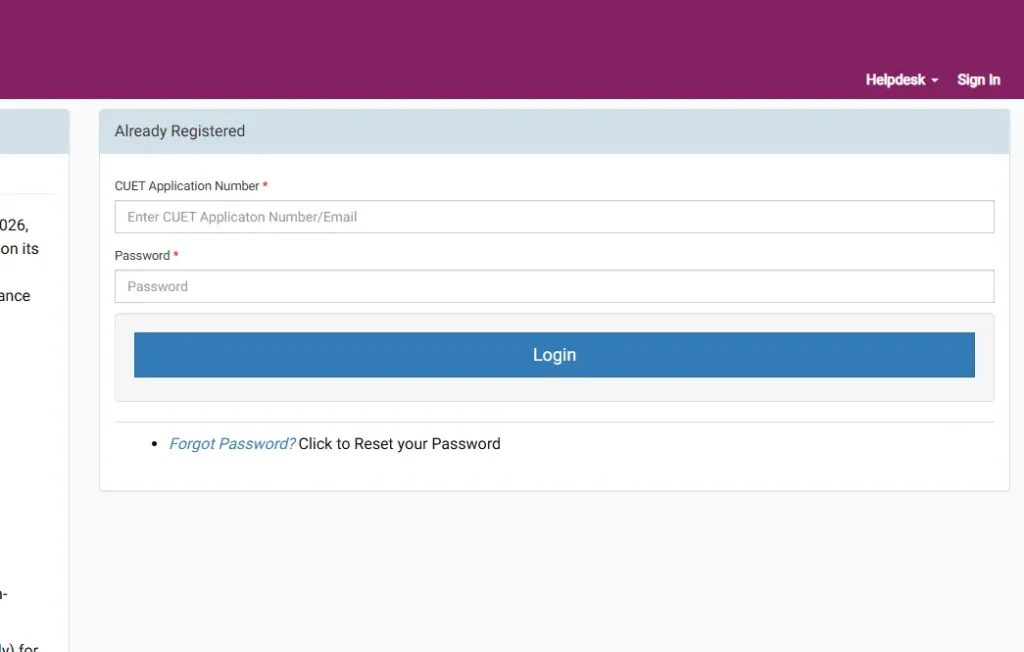
Go to ugadmission.uod.ac.in. This is the official DU admission portal for undergraduate courses. It is not the same as du.ac.in, which is the university’s general website and won’t show any allotment information.
Log in using your CUET application number and password, the same credentials you used to register. Your dashboard displays the college and programme you’ve been allotted, if any, based on your CUET UG 2026 normalised score.
Two details worth understanding here, because they explain a lot of the confusion students have every year:
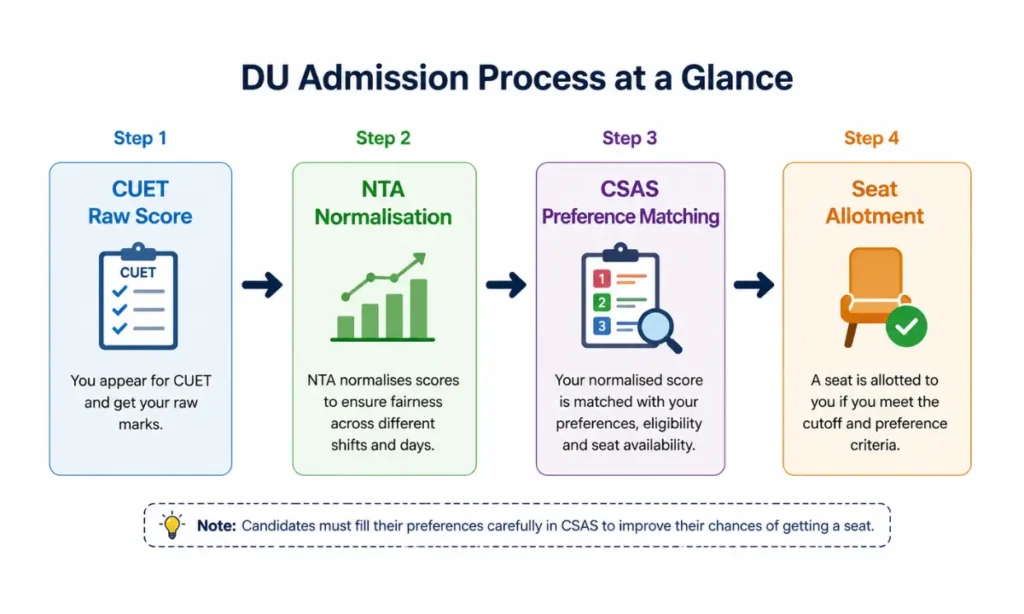
Your allotment is not based on your raw CUET marks. NTA converts everyone’s score into a normalised figure first, since CUET runs across multiple shifts with slightly different difficulty levels. DU works entirely off that adjusted number, not the score printed on your original scorecard.
Your allotment also depends on how you ranked your programme-college choices during registration, and how many seats were left in each combination after reservation categories were accounted for. Two students with the identical CUET score can end up with different colleges purely because of preference order.
The five days that decide everything
This is the part that trips up the most students, not because the process is complicated, but because the deadlines come fast and back to back.
- Accept your allotted seat by July 18, 2026. If you don’t respond, CSAS treats your silence as a decline. There’s no benefit of the doubt here, so don’t wait to “think it over.”
- Document verification runs through July 20, 2026. The college reviews your eligibility, subject mapping, and category certificates electronically. Keep your dashboard open during this window in case they request a clarification or an extra document.
- Pay the admission fee by July 21, 2026, at 11:59 PM. This is the deadline that actually locks in your seat. Miss it, and the allotment is cancelled outright.
A practical tip from how this plays out every year: if you’re even slightly unsure whether you want to keep an allotted seat, accept it first and decide later. Accepting doesn’t force you into anything permanent. Not accepting does.
Freeze or upgrade? The choice that trips up even good students
Once you accept, CSAS gives you two paths.
Freeze locks you into your current seat. You’re done. No more upgrades in later rounds, but also no risk.
Upgrade keeps you eligible for a better preference in Round 2 or Round 3. Here’s the part students miss: if the system does move you to a higher preference, your Round 1 seat is gone immediately, and there’s no going back to it, even if you end up disliking the new option.
The honest advice here is simple. Only choose Upgrade if you’d be genuinely satisfied with any of the programme-college combinations ranked above your current one. If you’re on the fence about whether you’d actually prefer something higher on your list, Freeze is the safer call.
What the cutoff numbers are showing this year
College-wise, category-wise figures are still populating across the CSAS portal and will keep firming up over the next day or two as more students accept or decline seats. But the early pattern lines up closely with what DU has seen in recent cycles.
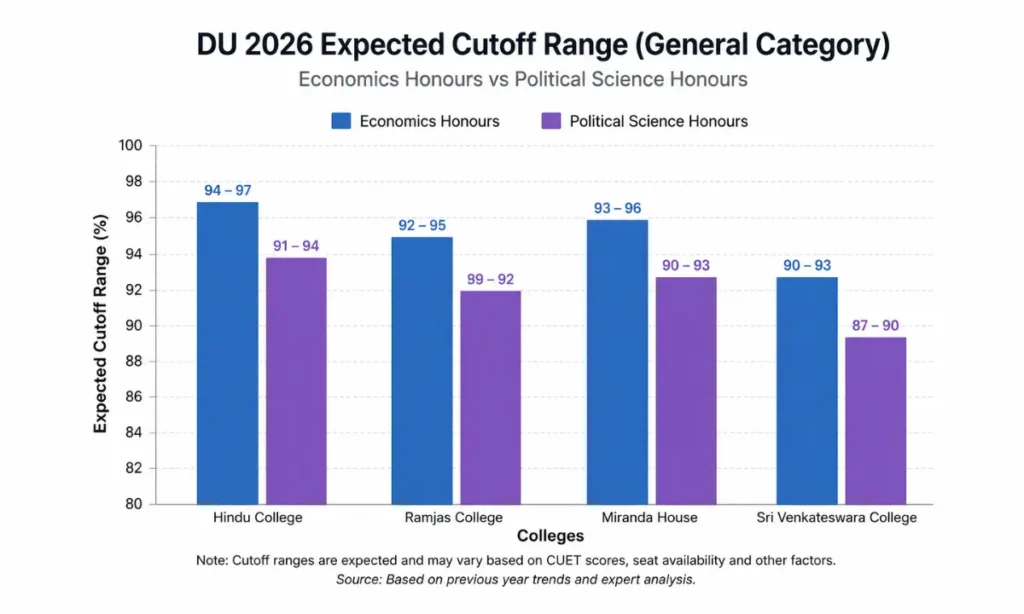
Economics Honours at SRCC, Hindu College, and Lady Shri Ram remains the most competitive combination at DU, with scores well above 900 out of 1000 needed for a realistic shot.
Political Science Honours shows a similar top-tier squeeze. Hindu College and Miranda House have historically landed close to 935 to 940 for general category, while a college like Maitreyi has admitted students closer to 725 for the same programme. That’s roughly a 200-point spread for the identical course, depending purely on which college you’re aiming for.
If your CUET score sits in the 850 to 900 range, you’re likely looking at strong second-tier colleges rather than the top three names in commerce and arts. That’s not a downgrade in the way it sounds. Several of these colleges have solid faculty and placement track records; the higher cutoffs elsewhere mostly reflect demand and brand recognition, not a real quality gap.
[Image suggestion: A simple bar chart comparing expected 2026 cutoff ranges for Economics Honours and Political Science Honours across three or four colleges, general category.]
DU UG expected cutoff 2026: full data sheet
Here’s a working reference table built off last year’s actual closing cutoffs and how this year’s registration numbers and CUET difficulty trends compare. Treat these as planning ranges, not confirmed figures. The real, college-wise numbers are populating on the CSAS portal through July and can shift by a few points once every round wraps up.
Category relaxation: what reserved candidates should double-check
DU builds in cutoff relaxation for OBC, SC, ST, and EWS candidates, and the pattern above holds fairly steady year to year, though the exact margin depends on the course and college. As a rough guide: OBC cutoffs generally sit 15 to 25 points below general category, EWS tracks close to OBC, SC typically runs 110 to 140 points below general, and ST usually lands a touch below SC, often 140 to 170 points below general.
The one place students genuinely lose seats they were entitled to: certificate validity. An expired category certificate, or one submitted in the wrong format, can disqualify an otherwise valid claim during document verification. There usually isn’t time to fix this once the process is underway, so check the issue and expiry dates on your certificate before verification begins, not during it.
If Round 1 doesn’t go your way
Round 1 cutoffs are always DU’s highest of the entire admission cycle. That’s simply how the seat math works. Once some candidates upgrade out of their Round 1 seats, or decline offers altogether, more seats open up. Round 2 and Round 3 cutoffs typically ease, sometimes considerably.
If your first allotment isn’t what you were hoping for, resist the urge to withdraw immediately. Keep a realistic mix of high-demand and off-campus colleges in your preference list. It costs nothing to leave those options in, and it gives you a real shot if the numbers shift in later rounds.
Students who don’t secure anything through the regular rounds aren’t completely out of options either. DU typically opens spot admission rounds once the main CSAS cycle wraps up, filling whatever seats remain vacant. Keep an eye on the portal once you reach that stage.
What about the second cutoff?
A lot of students are already searching for the DU CUET second cutoff date, which makes sense. Last year’s Round 2 list came out roughly a week after Round 1. Nothing official has been confirmed yet for this exact date this cycle, so the most reliable move is checking the CSAS portal directly rather than trusting a specific date circulating online before DU confirms it.
Quick reference: your next five days
| Step | Deadline |
| Accept allotted seat | July 18, 2026 |
| Document verification | Through July 20, 2026 |
| Fee payment | July 21, 2026, 11:59 PM |
Before you log in, have these ready
Class 10 and 12 mark sheets, a category certificate if applicable, and a government photo ID, all scanned and ready to upload. The portal moves fast once verification starts, and colleges generally won’t wait on missing paperwork.
The bottom line
The first cutoff is out, the portal is live, and the deadlines are unforgiving but predictable. Accept your seat by July 18, get through verification by July 20, and pay the fee by July 21, 11:59 PM. If Round 1 didn’t land the way you hoped, don’t panic and don’t withdraw early. The numbers move, sometimes by a wide margin, once Round 2 opens.
Check ugadmission.uod.ac.in directly for your personal status rather than relying on shared cutoff lists, since your result is tied to your login, not a public sheet.