131st Amendment Bill for Women's Reservation: The Delimitation Drama That Shook Parliament in 2026
Hey there, if you’re scratching your head over the sudden buzz around the 131st Amendment Bill for women’s reservation and that high-stakes delimitation push, you’re not alone. Just two days ago, on April 17, 2026, the Lok Sabha delivered a stunning blow: the bill failed to pass. It wasn’t even close to the two-thirds majority needed.
Look, I’ve been covering Indian politics for over 15 years here at ClarityWire, and I’ve seen my share of dramatic parliamentary moments. But this one? It felt different. The government tried to fast-track 33% seats for women in Parliament and state assemblies by linking it to a fresh delimitation exercise. The idea was bold—get it done by the 2029 elections instead of waiting till after 2031. Yet it crashed and burned.
Here’s the full, no-spin story based on everything that unfolded, from the decades-old history to the exact details of what those bills proposed. I’ll walk you through why it matters, what went wrong, and yes, my honest take at the end. Because in a democracy this big, understanding these moves isn’t just insider stuff—it’s how we all stay informed.
The Long Road to Women's Reservation: History That Explains Today's Chaos
Women’s reservation in higher legislatures didn’t pop up overnight. The fight has dragged on for nearly 30 years, and the roots go even deeper.
Back in 1992-93, the 73rd and 74th Amendments nailed it at the grassroots level—33% seats reserved for women in panchayats and municipalities. The results? Game-changing. Women leaders started prioritizing real issues like clean water, schools, and health clinics. Many states even bumped it up to 50%. Success story, right?
But when it came to Parliament and state assemblies? Total gridlock. The first serious attempt was the Constitution (81st Amendment) Bill in 1996 under the Deve Gowda government. It lapsed. Same story in 1998 and 1999. The UPA tried again in 2008-2010—passed the Rajya Sabha but never made it to a Lok Sabha vote.
Committees after committees recommended the same thing: 33% quota, rotation of seats, a 15-year trial period, and maybe a sub-quota for OBC women down the line. Yet every time, opposition over losing male seats or demands for caste-based tweaks killed the momentum. By the 17th Lok Sabha, women held just 14-15% of seats nationally. Pathetic for the world’s largest democracy.
That’s the backstory. All that delay set the stage for the 2023 breakthrough—and the 2026 drama we’re dissecting today.
The 2023 Game-Changer: What the Nari Shakti Vandan Adhiniyam Actually Delivered
Fast-forward to September 2023. The Constitution (128th Amendment) Bill—later the 106th Amendment Act, or Nari Shakti Vandan Adhiniyam—finally passed with huge majorities in both houses. Presidential assent came on September 28.
The law was straightforward and historic:
- One-third (33%) seats reserved for women in Lok Sabha, state assemblies, and Delhi’s assembly.
- That quota also kicks in for SC/ST seats—one-third of those reserved for SC/ST women.
- Seats rotate after every delimitation.
- It lasts 15 years (extendable by Parliament).
But here’s the catch that everyone’s still talking about: it doesn’t start right away. The reservation only kicks in after the next census and a fresh delimitation based on that data. Everyone assumed that meant post-2031. Northern states with faster population growth would gain seats; southern states worried about losing influence. The “delimitation link” became the big delay button.
This is exactly why the government came back in April 2026 with the 131st Amendment Bill for women’s reservation and its sister bills. They wanted to untie the knot and make it happen sooner.
What the 2026 Bills Proposed: Full Breakdown of the Delimitation Push
On April 16, 2026, the government tabled three connected bills in the Lok Sabha during a special session. The goal? Operationalize the women’s quota by the 2029 elections using 2011 census data and expanding Parliament so no region “loses” representation.
The Star of the Show: Constitution (131st Amendment) Bill, 2026
This was the big constitutional change. It tweaked Articles 81, 82, and 170 to:
- Raise Lok Sabha strength from 550 to up to 850 (815 from states + 35 from UTs).
- End the 1971-census freeze on seat numbers (that freeze was always set to expire after 2026 anyway).
- Let Parliament decide the timing of delimitation and which census data to use—basically green-lighting 2011 figures for speed.
- Remove the 2023 Act’s “wait for next census” clause. Women’s reservation would now start right after the new delimitation finishes.
- Keep the 15-year duration and seat rotation intact.
- Extend the quota to assemblies in Delhi, Puducherry, and Jammu & Kashmir.
The Delimitation Bill, 2026
This ordinary bill set up a new Delimitation Commission (Supreme Court judge as chair, plus Election Commissioners). It would redraw constituencies using the “latest published census” (2011 data) and hold public hearings. Proportional seat allocation based on current population realities.
Union Territories Laws (Amendment) Bill, 2026
A short one—just extending the 33% women’s quota to the three UTs with legislatures.
If it had passed, Lok Sabha could have ballooned to around 850 seats, with roughly 272-283 reserved for women from day one. Northern states would gain more clout; the government promised southern states wouldn’t suffer because of the overall expansion. Critics called it a clever way to deliver “Nari Shakti” while quietly fixing the long-overdue delimitation headache.
What Actually Happened in Parliament: The Vote That Changed Everything
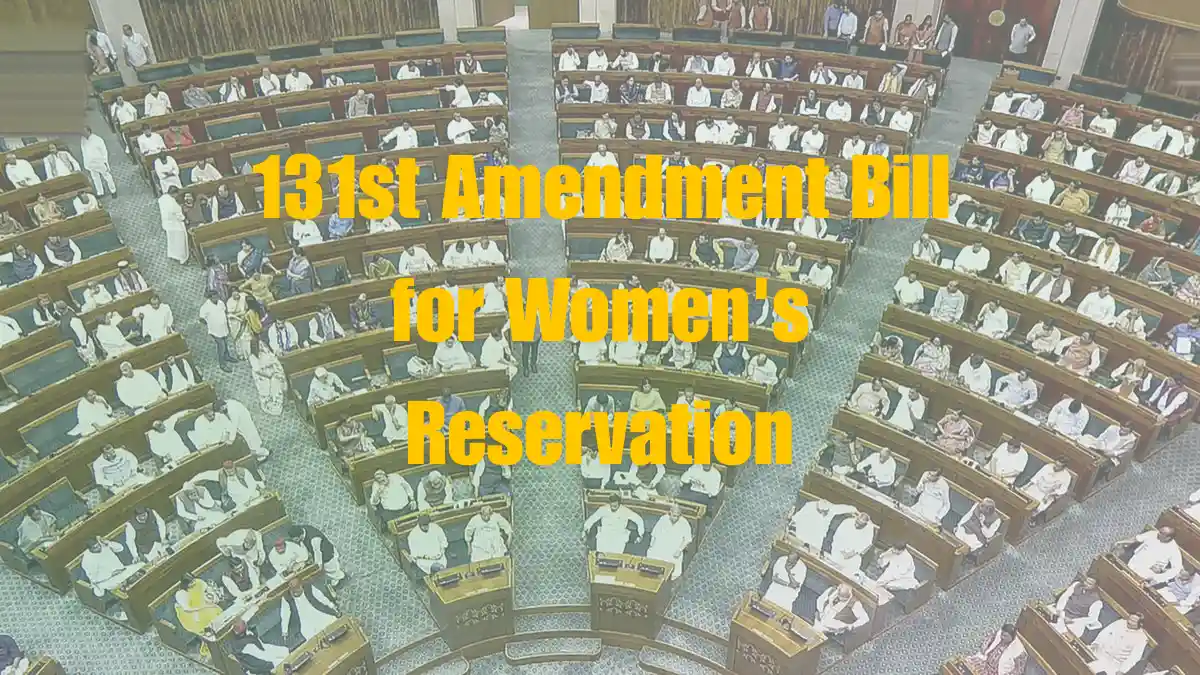
Debate was fiery. The bill went to division on April 17. Result: 298 votes in favor, 230 against. With 528 MPs present and voting, it needed roughly 352 yes votes for the two-thirds majority. It fell short—by a lot.
This was the first time a constitutional amendment from the Modi government got defeated in the Lok Sabha. The other two bills were immediately withdrawn because they couldn’t stand alone.
Opposition parties hammered two big points: the North-South divide (southern states feared diluted voice despite seat expansion) and the missing caste census angle. Some wanted OBC women sub-quotas baked in. The government argued it was pure empowerment—why wait another five years?
The crazy part? Everyone agrees on the need for more women in power. The fight was over how and when.
My Opinion on This
The 131st Amendment Bill for women’s reservation had its heart in the right place. Fast-tracking Nari Shakti? I’m all for it. But timing was off this time , as the oppositions say that it was a planted move by the bjp that they knew that would lost this amendment, they cloud have done it in there pervious years when they were in majority but they didn’t gave importance to this. The local bodies success story shows what women in power can do, and we desperately need that energy in Delhi and state capitals.
But honestly? The execution felt rushed. Bundling a huge seat expansion with delimitation using 2011 data—without enough cross-party buy-in or a clear roadmap for southern states—invited exactly the backlash we saw. The North-South tension isn’t imaginary; it’s real federal anxiety. And ignoring louder calls for a caste census alongside it? That just poured fuel on the fire.
This is the only bill or amendment that, in Modi’s whole life of serving tenure, was rejected and honestly, that’s going to be a big scar.
Would I have voted yes if I were in the Lok Sabha? Probably. Women’s reservation has waited too long already. But I get why it failed. Politics is about numbers and trust. Next time, the government needs to build that trust first. The 2023 law still stands—implementation is just delayed again. That’s not the end of the world, but it’s a missed chance for 2029. India deserves better than another five-year wait
Why the 131st Amendment Bill for Women's Reservation Actually Matters
This isn’t just inside-baseball politics. It’s about the soul of Indian democracy.
India has over 1.4 billion people. Women make up half, yet they’ve been underrepresented at the top for decades. Successful local reservation proves women bring fresh focus—health, education, sanitation. Scaling that nationally could reshape policy for generations.
Delimitation itself is overdue. Seats have been frozen since the 1970s based on 1971 numbers. Fresh data means fairer “one person, one vote.” Pairing it with women’s quota was smart politics on paper: deliver gender justice and update representation without shrinking anyone’s pie.
The truth is, this affects every voter. By 2029, we could have seen nearly 300 women MPs instead of the usual 70-80. That’s massive.
FAQ: Everything You Still Want to Know About the 131st Amendment Bill for Women's Reservation
What exactly is the 131st Amendment Bill for women’s reservation and why did it fail?
It was a 2026 constitutional amendment to activate the 33% women’s quota immediately after a new delimitation (using 2011 data) instead of waiting for the next census. It failed because it got only 298 votes in the Lok Sabha instead of the required two-thirds majority.
How does the 2026 delimitation bill connect to women’s reservation in Lok Sabha?
The delimitation bill was the vehicle to redraw seats and allocate the women’s quota faster. Without it passing alongside the 131st Amendment, the whole package collapsed.
What’s the difference between the 106th Amendment (2023) and the 131st Amendment Bill?
The 2023 law created the quota but tied it to a future census. The 131st tried to remove that delay and expand total seats so delimitation doesn’t hurt any region.
Will women’s reservation still happen after the 131st Amendment Bill failed?
Yes—via the original 2023 Nari Shakti Vandan Adhiniyam. It just stays linked to the post-2031 census and delimitation cycle unless Parliament tries again.
How will the delimitation bill 2026 have affected North-South states if it passed?
Northern states with higher population growth would have gained more Lok Sabha seats. The government promised overall expansion would protect southern representation proportionally, but critics weren’t convinced.