
A Bat Landed on His Face While He Slept. Nineteen Days Later, an 11-Year-Old Boy Was Dead
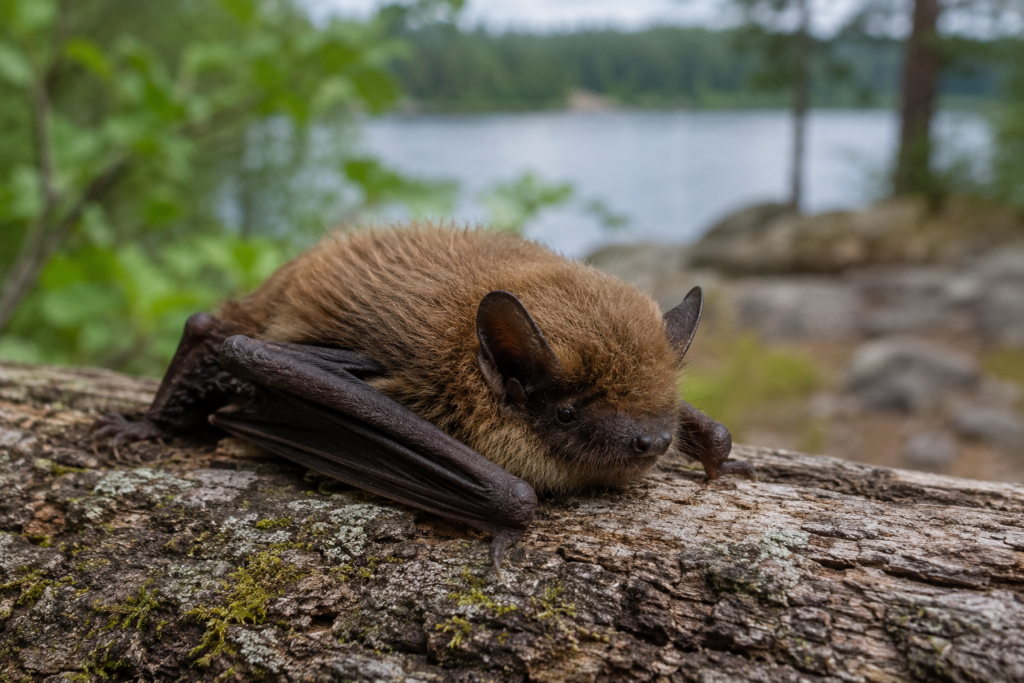
He didn’t have a single bite mark. No blood, no visible wound, nothing that screamed “emergency.” Just a bat, sitting on his nose and mouth, in the middle of the night at a family cottage in northern Ontario.
His parents did what most of us would probably do: they got the bat off him, released it outside, and went back to sleep.
Three weeks later, their son was gone.
His story now detailed in a case report from the Canadian Medical Association Journal (CMAJ) is the first locally acquired human rabies death in Ontario since 1967. Doctors are sharing it publicly, with the family’s permission, because they believe it could save someone else’s life this summer.
What Actually Happened
In the summer of 2024, the boy was staying at a cottage in northern Ontario when he woke up to find a bat resting on his face. Startled, he swatted it away. His father caught the bat in a cooking pot and let it go outside.
That was it. No panic, no trip to the doctor.
Why? Because there was nothing to see. No scratch. No puncture wound. No sign that the bat was acting strangely no erratic flying, no aggression, nothing that fit the “rabid animal” image most of us carry in our heads.
So the family, understandably, moved on.
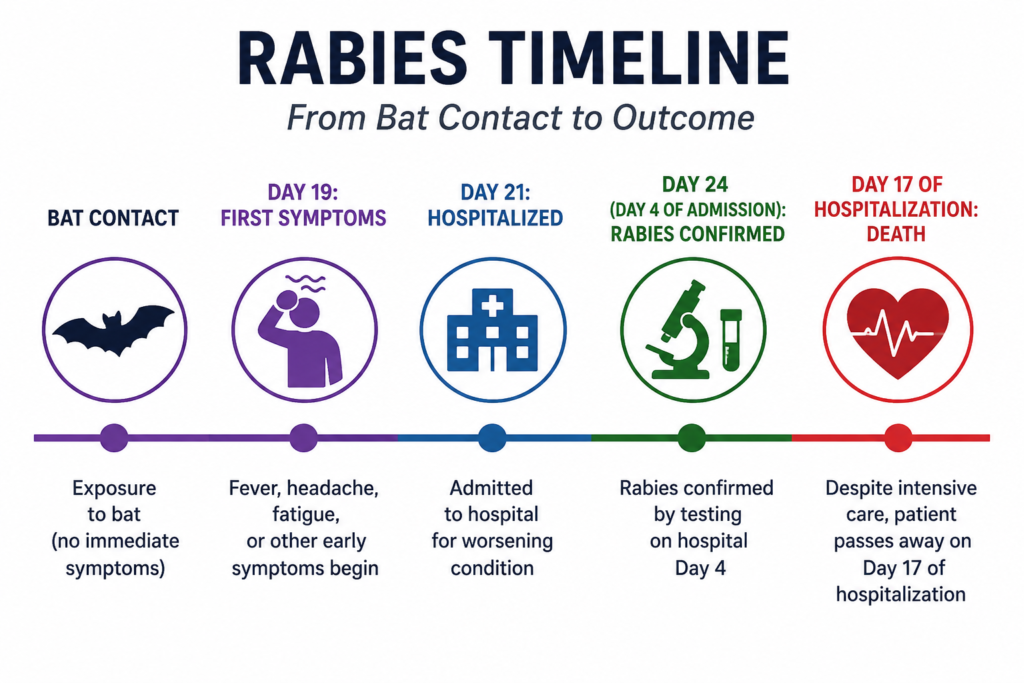
Nineteen days later, the boy started feeling tingling and numbness on the right side of his face. Then came facial swelling and a loss of appetite. He was taken to an urgent care clinic and initially diagnosed with something far more common a cold sore-related condition called herpes gingivostomatitis and sent home with antiviral medication.
By the next morning, he was back in the emergency room. This time with slurred speech, facial weakness, and reduced sensation. Within hours, he had a fever, trouble swallowing, confusion, and hallucinations. He was placed on a ventilator and admitted to the pediatric intensive care unit.
That’s when doctors made the connection.
“When we saw the patient in the PICU, we strongly suspected rabies, given the bat exposure and typical neurologic features,” the treating physicians wrote in the case report.
A PCR test confirmed it on day four of his hospital stay. The Canadian Food Inspection Agency later identified the specific strain as a bat rabies virus variant, matching the exposure back at the cottage.
His condition kept deteriorating. By day five, his brainstem reflexes were gone. Doctors and family made the decision to withdraw life-sustaining treatment on day 17. He died peacefully, surrounded by his family.
Why “No Bite Mark” Doesn’t Mean “No Risk”
This is the single most important medical fact in this entire story, and it’s the one doctors most want people to understand.
Bat teeth are tiny. A bite or scratch from a bat can be so small it’s essentially invisible no blood, no mark, nothing you’d notice by looking or even feeling. That’s very different from a dog bite or a raccoon scratch, which are hard to miss.
Dr. Brian Hummel, the case report’s senior author and a pediatric infectious disease physician at McMaster Children’s Hospital, put it plainly: bats are the primary rabies concern in Canada precisely because physical contact with one is considered high-risk regardless of whether an injury is visible.
[Suggested infographic: Side-by-side comparison “What a dog bite looks like” vs. “What a bat bite can look like (nothing at all)”]
The Incubation Period Is the Hidden Danger
Rabies doesn’t announce itself right away. The virus typically takes 20 to 60 days to travel from the site of exposure to the brain and spinal cord though it can be faster or slower depending on where the bite occurred and how much virus entered the body.
That delay is deceptive. It creates a false sense of safety. Days pass, nothing happens, and the incident starts to feel like a non-event.
But that same incubation window is also the only opportunity to stop the virus. Once neurological symptoms begin numbness, confusion, muscle spasms, difficulty swallowing rabies is almost universally fatal. There is no cure at that stage, only supportive care.
Before symptoms start, though, a well-established treatment called post-exposure prophylaxis (PEP) a series of rabies vaccine doses plus human rabies immune globulin is highly effective at preventing the disease entirely.
In other words: the difference between this boy dying and this boy going on to live a normal life may have come down to a single decision made in the hours after the bat encounter, not the weeks after.
How Common Is This, Really?
It’s worth being clear-eyed about scale here, because rabies headlines can trigger outsized fear relative to actual risk.
- Canada has recorded just 28 human rabies cases since 1924 roughly one per century-adjusted decade.
- The last Canadian case before this one was a man exposed to a bat in British Columbia in 2019.
- This was the first case in Ontario specifically since 1967 nearly six decades.
- Thousands of animal rabies cases are confirmed in Canada each year, but human infection remains extremely rare.
So this isn’t a sign that rabies risk is suddenly rising. It’s a tragic, statistically rare event but one that is almost entirely preventable with the right response, which is exactly why doctors are using it as a teaching moment rather than letting it fade as just another sad headline.
What To Actually Do If You Wake Up With a Bat in the Room
This is the actionable core of the story, and it’s simpler than most people expect.
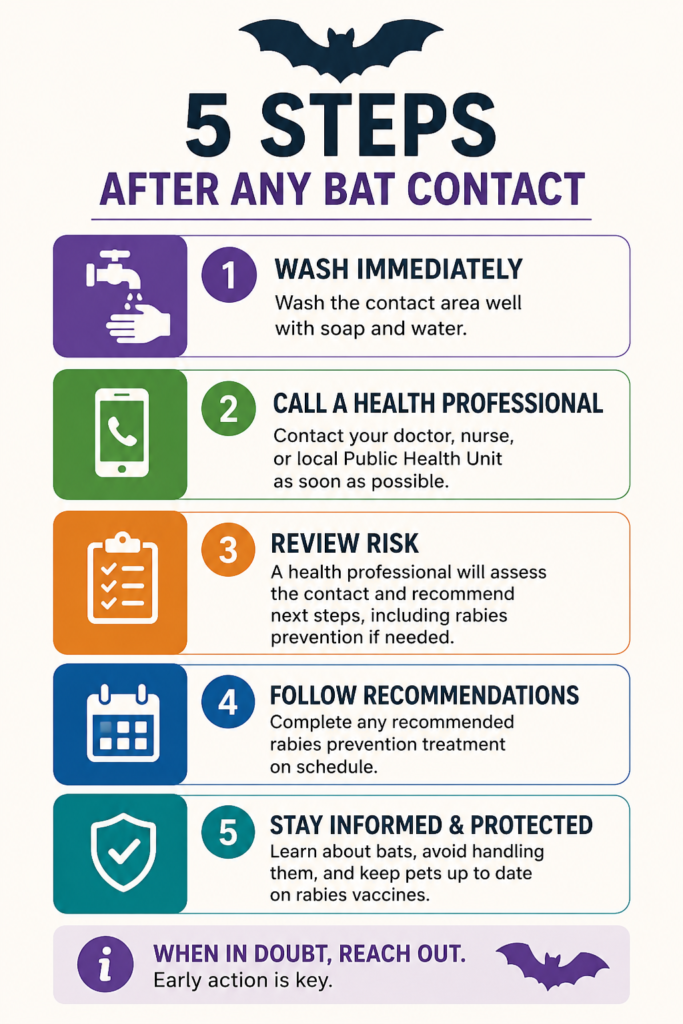
1. Treat any bat contact as a potential exposure no exceptions
You do not need to see a bite, scratch, or blood. If a bat has touched your skin, landed on you, or you can’t rule out contact (for example, waking up with a bat in the room while you were asleep or a young child was alone with one), treat it as an exposure.
2. Call your local public health authority the same day
Don’t wait to see if symptoms develop by the time they do, treatment options narrow drastically. In Canada, contact your local public health unit or Telehealth line. In the U.S., contact your state or local health department or go to urgent care/the ER and mention the bat contact specifically.
3. If possible and only if it’s safe try to capture the bat
Testing the actual bat for rabies can sometimes rule out the need for treatment entirely, sparing you the vaccine series. But don’t take unnecessary risks to catch it, and never touch a bat with bare hands.
4. Don’t let the absence of “erratic behavior” reassure you
A calm, quiet, seemingly harmless bat can still carry rabies. Erratic or aggressive behavior is a red flag, but its absence is not a green light.
5. Know the early symptoms and don’t dismiss them as something else
Early rabies symptoms are easy to mistake for other conditions. In this case, initial numbness and facial swelling were first diagnosed as a cold sore-related illness. Watch for:
- Tingling, pain, or numbness near the exposure site
- Fever, headache, general weakness (flu-like symptoms)
- Facial swelling or weakness
- Difficulty swallowing or excessive salivation
If any of these follow a known or possible bat encounter, tell your doctor about the bat specifically don’t assume they’ll connect the dots without that information.
6. Bat-proof spaces where children and pets sleep
Seal gaps around attics, chimneys, and window screens where bats can enter. If you find a bat inside a room where someone was sleeping even if no one recalls contact public health guidance in many regions is to treat it as a potential exposure, precisely because bites can go unnoticed.
[Suggested image: Simple checklist graphic “5 Steps After Any Bat Contact” designed for quick mobile scanning]
Why Summer Is the Season to Pay Attention
Dr. Hummel specifically flagged the timing of this report’s release: summer is peak season for human-bat encounters, thanks to open windows, cottage stays, camping trips, and bats being most active.
If you’re heading to a cabin, cottage, or campsite this summer, it costs nothing to check window screens and be alert to bats in sleeping areas a few minutes of prevention against a disease that offers no second chances once symptoms start.
The Bottom Line
This family chose to share their son’s story publicly because they wanted something good to come from an unimaginable loss. The lesson they’re offering isn’t “be terrified of bats” it’s “don’t assume you’re fine just because you don’t see a wound.”
Rabies is almost always fatal once symptoms appear, but it’s almost entirely preventable before that point. The gap between those two facts is exactly where prompt medical attention makes all the difference.
If you or your child have had any physical contact with a bat recently or in the past two months contact a doctor or public health authority today, even without a visible bite. It’s a conversation that takes minutes and, as this story shows, can be the difference between life and death.
Sources: Canadian Medical Association Journal (CMAJ) case report; CBC News; CNN; Canadian Veterinary Medical Association (CVMA); Centers for Disease Control and Prevention (CDC).