claritywire.in

Author name: Ashutosh bhatt

I'm a Delhi-based digital marketer with strong hands-on experience in SEO on-page, off-page, and technical backed by working knowledge of Google Ads, Facebook & Instagram Ads, and the full analytics stack (Google Search Console, GA4, GTM, SEMrush, Ahrefs, Screaming Frog, and more). I've managed 100+ live SEO and web projects across finance, education, lifestyle, and sports, and I built two of my own web properties from the ground up: YourDigiHelp, a digital marketing resource site, and ClarityWire, an education-focused platform. I enjoy combining data-driven SEO strategy with paid media execution to drive real, measurable growth.

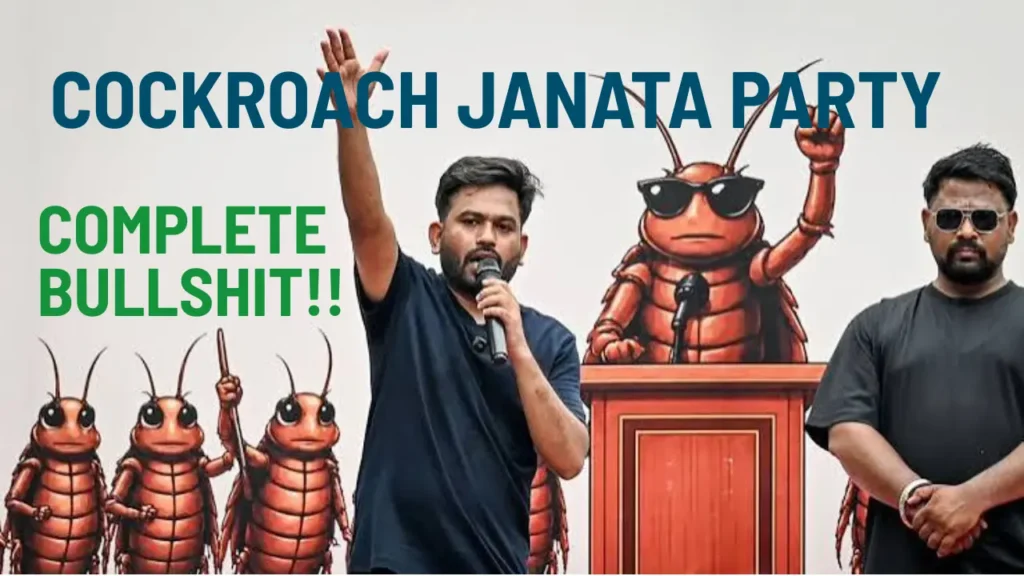
Thumbnail reading 'Cockroach Janata Party' and 'Complete Bullshit!!' showing a man speaking into a microphone with his hand raised, another man standing beside him in sunglasses, and illustrated cartoon cockroaches wearing sunglasses gathered around a podium.
Politics

NEET Paper Leaks: Cockroach Janta Party’s (CJP) Reality!

The Paper Leaks Are The Government’s Failure. The Cockroach Party Isn’t The Answer Either. Let’s start with what shouldn’t be up for debate: a country cannot keep running exams where the paper leaks before the students even sit down. NEET has been hit by leak allegations more than once now. SSC exams have had their own scandals. Every time this happens, lakhs of students who spent years preparing are told, sorry, start again, or worse, sit and wonder if the person next to them already had the answers a day earlier. This is not bad luck. This is not “a few bad apples in the system.” When the same exams keep leaking year after year, that’s not an accident, that’s a system nobody fixed the first time, or the second. The government runs these exams. The government picks the vendors, the printers, the transport, the storage. When it fails, it isn’t the students’ fault, and it isn’t some vague “systemic issue” floating in the air with no owner. Someone signed off on the printing contract. Someone approved the storage facility. Someone decided not to prosecute the last leak all the way to the end. Accountability means naming that someone, not shuffling files between ministries until people stop asking. So yes, the anger on the streets is earned. A generation that did everything right, studied on time, paid the coaching fees, showed up at the center at 6 AM, has every reason to be furious that the exam itself was rigged against them before it began. The education minister owes the country a real answer, not a press note. If heads have to roll for this to actually get fixed, they should roll. Here’s where I part ways with the crowd at Jantar Mantar, though. The Cockroach Janta Party started as a joke about a judge’s comment, and it caught fire because the joke was funny and the anger underneath it was real. Fair enough. But watch what’s happened since May. A satirical account has turned into a full political operation with spokespeople, press briefings, and a founder who flew in from the US the moment the cameras showed up. That’s not students organizing a protest. That’s a launch. We’ve seen this movie before. India Against Corruption also began as a moral cause nobody could argue with; who’s against corruption? Anna Hazare fasted, the country watched, and within two years the people standing next to him on stage had turned that movement into a political party and a chief minister’s chair. The cause was real. The people who rode it to power weren’t the ones who paid for it with a hunger strike. Abhijeet Dipke isn’t Anna Hazare, and he doesn’t need to be. He just needs the same playbook: give a real grievance a catchy name, front it with a face who understands media cycles better than most journalists do, and let the anger do the organizing for you. Ashutosh has spent years building an audience out of anti-government content and knows exactly how a moment like this gets monetized into relevance. Saurav Das speaking for the party on X, calmly laying out “demands,” is a spokesperson doing spokesperson things, which is a strange role for a “leaderless Gen Z movement” to suddenly need. None of that means the demands are wrong. NEET needs fixing. The exam leaks need real consequences, not a committee. But a movement’s leadership can be self-interested even when its cause is just, and I don’t see why students on the ground should trust that the people holding the microphone this time are any less interested in a political future than the ones from 2011 were. The last time this exact template ran, the “movement” ended up as a chief minister’s office within three years. Blame the government first. The paper leaks are theirs to answer for, and no protest movement, however catchy its name, changes whose job it was to stop them. But don’t hand your trust to whoever shows up holding the loudest microphone either. Students deserve both: a government that actually fixes the exam system, and a movement that doesn’t quietly turn their anger into somebody else’s career.

Politics

Dr Shyama Prasad Mukherjee 125th Birth Anniversary

Dr Shyama Prasad Mukherjee’s 125th birthday just turned into a full political moment, and here’s why Every July 6, a few wreaths get laid, a few tweets go out, and Dr Shyama Prasad Mukherjee’s name trends for a day. This year was different. His 125th birth anniversary landed with a foundation stone, a school syllabus announcement, a presidential-style op-ed, and enough political commentary to fill a week’s worth of newspapers. If you’re searching for what actually happened and why people won’t stop talking about it, you’re in the right place. Who was Dr Shyama Prasad Mukherjee, really Born on 6 July 1901 in Calcutta, Mukherjee wasn’t handed a political career, he built one on top of an academic one. His father, Sir Ashutosh Mukherjee, was Chief Justice of the Calcutta High Court and a towering figure in Bengali education. That name carried weight, but Shyama Prasad still had to earn his own. He became Vice-Chancellor of Calcutta University at 33, one of the youngest to hold the post. He studied law at Lincoln’s Inn in London, taught, wrote, and pushed Indian languages into a university system still leaning heavily on English. Then politics pulled him in. He joined the Congress briefly, left it, served as Bengal’s Finance Minister, led the Hindu Mahasabha for a stretch, and later joined Nehru’s first cabinet as Minister for Industry and Supply. He didn’t stay there long. In 1950, he resigned over the Nehru-Liaquat Pact, unhappy with how the government was handling the treatment of minorities on both sides of the new border. A year later, on 21 October 1951, he founded the Bharatiya Jana Sangh, the party that would eventually become the BJP. His last public act was the one people remember most. In 1953, Kashmir required a permit for Indian citizens to enter the state, a rule Mukherjee found absurd for a state inside India. He tried to cross into Jammu without one, was arrested at Lakhanpur on 11 May, and died in custody in Srinagar on 23 June 1953, at just 51. The circumstances were murky enough that his mother, Jogmaya Devi, publicly demanded a judicial inquiry, one that never really settled the matter to anyone’s satisfaction. The line that outlived him If Mukherjee is remembered for one sentence, it’s this one, delivered as he fought the idea of Kashmir running on a separate constitution, a separate flag, and a separate head of government: “Ek desh mein do Vidhan, do Pradhan aur do Nishan nahi chalenge.” (One nation cannot function with two constitutions, two heads of government, and two flags.) It’s one of the most quoted Shyama Prasad Mukherjee lines in Indian political history, and it’s the reason his name resurfaces every time Article 370 comes up in Parliament, in an election speech, or in a newspaper column marking his birthday. What actually happened this July 6 This year’s Jayanti wasn’t a quiet remembrance. A string of things happened on the same day, and together they explain why he was suddenly everywhere in the news. Prime Minister Modi wrote an op-ed. Titled “A life dedicated to the unity and progress of India,” the Prime Minister described Mukherjee as a nation-builder whose life was dedicated to India’s unity, integrity and progress, crediting his contributions to education, industry, humanitarian service and national integration. Amit Shah landed in Kolkata and laid a foundation stone. The Union Home Minister arrived in Kolkata to lay the foundation stone for a 125-foot statue of Mukherjee coming up at Eco Park in New Town. West Bengal’s Chief Minister Suvendu Adhikari, Union Culture Minister Gajendra Singh Shekhawat, and state BJP president Samik Bhattacharya were all present for it. Bengal announced Mukherjee will now be part of the school syllabus. Speaking at a function at Mitra Institution, Suvendu Adhikari announced that a chapter on Mukherjee’s life would be added to the state’s school syllabus, saying students should definitely learn about his contribution. Notably, the birth anniversary was also marked for the first time at Nabanna, the state secretariat, something that would have been unthinkable in Bengal politics just a couple of years ago given the state’s changed political landscape after the 2026 assembly elections. Amit Shah paid tribute in his own words too. He called Mukherjee a champion of India’s unity and cultural nationalism, someone who lived by the principle of “Nation First” and played a central role during the partition of Bengal, alongside his fight to keep Jammu and Kashmir fully part of India. BJP’s national leadership tied him directly to Article 370. In Jammu, party leader Nitin Nabin told a gathering that PM Modi had fulfilled Mukherjee’s vision for Jammu and Kashmir by scrapping Article 370, framing it as the realisation of “one Constitution, one leader, one symbol”. He also used the platform to take a swipe at the previous Congress-era approach to the region, claiming past governments had resisted even hoisting the national flag in the Kashmir Valley. Tripura’s Chief Minister held his own event. In Agartala, Manik Saha urged the state’s youth to follow Mukherjee’s ideals and dedicate themselves to nation-building and public service, calling him a patriot, educationist and visionary statesman. Reading between the tributes Almost every tribute this year came from one political direction, and that’s worth naming plainly rather than pretending otherwise. Mukherjee founded the ideological line that runs through today’s BJP, so it makes sense the party leads the commemoration. What’s changed is the scale, and where it’s happening. Bengal is the interesting part. For decades, marking Mukherjee’s birthday at the state secretariat would have been politically unthinkable, he was a Bengal-born figure whose legacy sat uneasily with the state’s ruling parties for most of independent India’s history. That it happened at Nabanna this year, backed by a sitting Chief Minister’s promise to put him in textbooks, tells you how much West Bengal’s political ground has shifted. The BJP’s 2026 state election win put a very different administration in charge of who gets remembered and how. Public reaction to the textbook decision

Politics

Baruipur Case: What Happened, Who’s Arrested Outrage in Bengal

The Baruipur case: everything we know so far, and why Bengal is furious An 11-year-old girl left home on a Saturday evening to buy something from a nearby shop. She never came back. By Sunday morning, her body was pulled from a pond in Surjyapur Haat, near Baruipur in West Bengal’s South 24 Parganas district. Within hours, the area was on fire  literally. Tyres burned on the road, trains stopped running, and a mob had beaten a man to death over his suspected role in the crime. That’s the Baruipur case in one paragraph. Below is everything confirmed so far, what the law actually allows in a case like this, and where things could go wrong if the state doesn’t act fast. A quick, necessary fact-check on the politics A lot of commentary around this case assumes West Bengal is still run by the Trinamool Congress (TMC), the party that had governed the state for 15 years under Mamata Banerjee. That’s no longer accurate. Following the 2026 state assembly election, the BJP won a majority, and Suvendu Adhikari was sworn in as West Bengal’s first BJP Chief Minister on May 9, 2026. That matters here because it means this case is unfolding under the new BJP-led state government, not a TMC one. Whatever happens next in Baruipur  swift charges, delays, political point-scoring will be the current government’s record to answer for, regardless of which party people associate with past incidents in the state. This isn’t a small detail. If you’re going to hold a government accountable for how it handles a case like this, you need to know which government is actually in charge. Why people are comparing this to Nirbhaya The comparisons to the 2012 Delhi gang-rape case (widely known as the “Nirbhaya case”) aren’t accidental. That case took years to move through trial, appeal, and mercy petitions before the convicts were executed in 2020 eight years after the crime. Several other high-profile sexual assault cases in India since then have followed a similar pattern: intense public anger in the first week, followed by a slow crawl through courts, adjournments, and appeals that can stretch on for years. That history is exactly why the anger in Baruipur isn’t just about this one crime. It’s about a pattern. People aren’t only asking “who did this?” They’re asking “will this actually go anywhere, or will it disappear into the system like the others did?” What happened in Baruipur According to police accounts and multiple news reports, the girl went missing on Saturday, July 4, 2026, after leaving home to buy food (some reports say a birthday gift for a friend). Her family raised an alarm when she didn’t return. Her body was found the next morning, stuffed in a sack, in a pond close to her home under the Dhapdhapi II Gram Panchayat area. Locals who gathered at the scene alleged she had been raped and murdered. A preliminary post-mortem reportedly found signs of sexual assault, multiple bite marks, and strangulation. The discovery triggered protests almost immediately. Residents blocked the Baruipur-Joynagar Road, burned tyres, and disrupted rail traffic for hours. During the unrest, a 26-year-old man, identified in reports as Indrajit Tanti, was lynched by a mob that suspected him of involvement. The mob also clashed with police and damaged vehicles. Where the case stands right now As of this writing, police have named at least three people in connection with the case. Two individuals  reported as Prabhas Mondal and a man identified as Anand (or Ananda) Sardar have been arrested. CCTV footage reportedly shows the child walking alongside one of the accused shortly before she went missing. A few important facts about the investigation so far: A Special Investigation Team (SIT) and the West Bengal Special Task Force (STF) have been assigned to the case. Senior IG-level police officers are overseeing the probe. Additional central armed police forces (CAPF) have been deployed to the area to prevent further violence. The state’s Chief Minister has personally spoken to the victim’s family and promised the strictest legal action against everyone involved. None of this is final. Arrests are not convictions, and the accused are entitled to a trial. But the pace of the response  SIT, STF, CAPF deployment, all within 24-48 hours  tells you how much pressure is already on the administration.   What the law actually allows here A few legal points worth knowing, since they’ll come up as this case develops: POCSO Act. Because the victim is a minor, the case falls under the Protection of Children from Sexual Offences (POCSO) Act, 2012, which mandates special courts and time-bound trials specifically to avoid the years-long delays seen in adult cases. The 2018 amendment. Following the Kathua and Unnao cases, India amended its criminal law to allow the death penalty for the rape of a child under 12. Given the victim’s age here, this provision is likely to be directly relevant if the case reaches trial and conviction. Fast-track courts. West Bengal, like most states, has designated fast-track special courts for POCSO cases. Whether this case actually gets fast-tracked in practice  not just on paper  is one of the things worth watching in the weeks ahead. The lynching is a separate crime. However strong the anger, the mob killing of a suspect is itself a criminal act under Indian law. It also risks compromising the investigation: if the wrong person was killed, or if evidence tying the real culprits to the crime gets muddled by an extrajudicial killing, it can actually work against the victim’s family getting justice. Two wrongs don’t add up to accountability they add up to a second case the police now also have to investigate. Where this needs to go from here Here’s the honest, direct take: this case cannot be allowed to fade into the news cycle the way so many others have. A child was raped and murdered. The people demanding the harshest punishment the law allows are not being unreasonable they’re reacting to

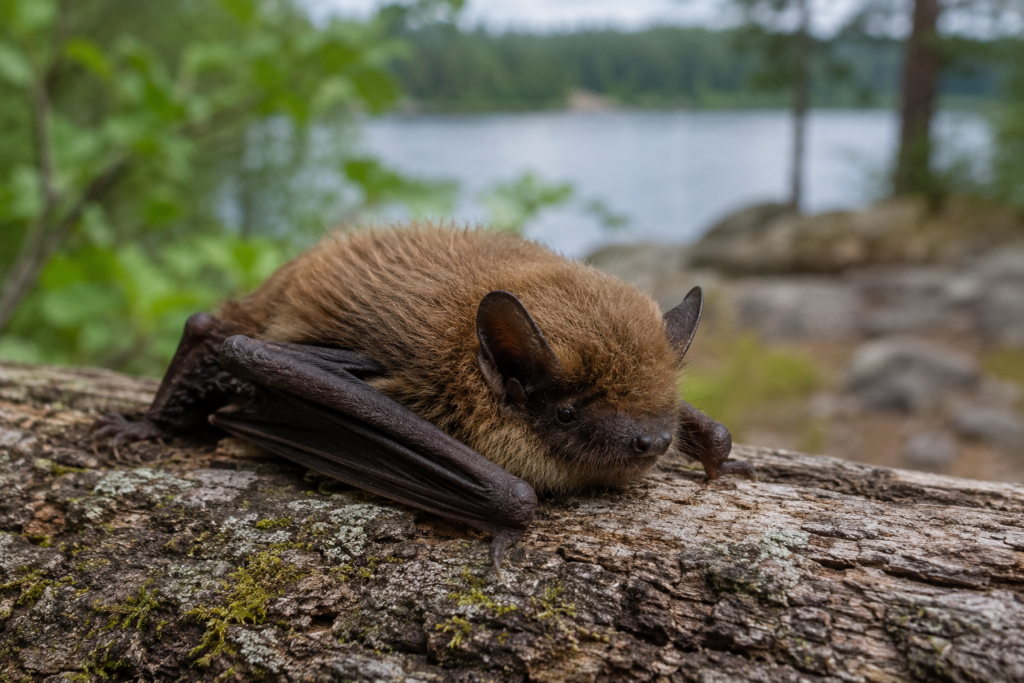
Little Brown Bat (Myotis lucifugus) Resting in an Ontario Forest
Politics

Canadian Boy Dies of Rabies After Bat Landed on His Face

A Bat Landed on His Face While He Slept. Nineteen Days Later, an 11-Year-Old Boy Was Dead He didn’t have a single bite mark. No blood, no visible wound, nothing that screamed “emergency.” Just a bat, sitting on his nose and mouth, in the middle of the night at a family cottage in northern Ontario. His parents did what most of us would probably do: they got the bat off him, released it outside, and went back to sleep. Three weeks later, their son was gone. His story  now detailed in a case report from the Canadian Medical Association Journal (CMAJ)  is the first locally acquired human rabies death in Ontario since 1967. Doctors are sharing it publicly, with the family’s permission, because they believe it could save someone else’s life this summer.   What Actually Happened In the summer of 2024, the boy was staying at a cottage in northern Ontario when he woke up to find a bat resting on his face. Startled, he swatted it away. His father caught the bat in a cooking pot and let it go outside. That was it. No panic, no trip to the doctor. Why? Because there was nothing to see. No scratch. No puncture wound. No sign that the bat was acting strangely  no erratic flying, no aggression, nothing that fit the “rabid animal” image most of us carry in our heads. So the family, understandably, moved on. Nineteen days later, the boy started feeling tingling and numbness on the right side of his face. Then came facial swelling and a loss of appetite. He was taken to an urgent care clinic and initially diagnosed with something far more common  a cold sore-related condition called herpes gingivostomatitis  and sent home with antiviral medication. By the next morning, he was back in the emergency room. This time with slurred speech, facial weakness, and reduced sensation. Within hours, he had a fever, trouble swallowing, confusion, and hallucinations. He was placed on a ventilator and admitted to the pediatric intensive care unit. That’s when doctors made the connection. “When we saw the patient in the PICU, we strongly suspected rabies, given the bat exposure and typical neurologic features,” the treating physicians wrote in the case report. A PCR test confirmed it on day four of his hospital stay. The Canadian Food Inspection Agency later identified the specific strain as a bat rabies virus variant, matching the exposure back at the cottage. His condition kept deteriorating. By day five, his brainstem reflexes were gone. Doctors and family made the decision to withdraw life-sustaining treatment on day 17. He died peacefully, surrounded by his family. Why “No Bite Mark” Doesn’t Mean “No Risk” This is the single most important medical fact in this entire story, and it’s the one doctors most want people to understand. Bat teeth are tiny. A bite or scratch from a bat can be so small it’s essentially invisible  no blood, no mark, nothing you’d notice by looking or even feeling. That’s very different from a dog bite or a raccoon scratch, which are hard to miss. Dr. Brian Hummel, the case report’s senior author and a pediatric infectious disease physician at McMaster Children’s Hospital, put it plainly: bats are the primary rabies concern in Canada precisely because physical contact with one is considered high-risk regardless of whether an injury is visible. [Suggested infographic: Side-by-side comparison “What a dog bite looks like” vs. “What a bat bite can look like (nothing at all)”] The Incubation Period Is the Hidden Danger Rabies doesn’t announce itself right away. The virus typically takes 20 to 60 days to travel from the site of exposure to the brain and spinal cord  though it can be faster or slower depending on where the bite occurred and how much virus entered the body. That delay is deceptive. It creates a false sense of safety. Days pass, nothing happens, and the incident starts to feel like a non-event. But that same incubation window is also the only opportunity to stop the virus. Once neurological symptoms begin  numbness, confusion, muscle spasms, difficulty swallowing  rabies is almost universally fatal. There is no cure at that stage, only supportive care. Before symptoms start, though, a well-established treatment called post-exposure prophylaxis (PEP)  a series of rabies vaccine doses plus human rabies immune globulin  is highly effective at preventing the disease entirely. In other words: the difference between this boy dying and this boy going on to live a normal life may have come down to a single decision made in the hours after the bat encounter, not the weeks after. How Common Is This, Really? It’s worth being clear-eyed about scale here, because rabies headlines can trigger outsized fear relative to actual risk. Canada has recorded just 28 human rabies cases since 1924  roughly one per century-adjusted decade. The last Canadian case before this one was a man exposed to a bat in British Columbia in 2019. This was the first case in Ontario specifically since 1967  nearly six decades. Thousands of animal rabies cases are confirmed in Canada each year, but human infection remains extremely rare. So this isn’t a sign that rabies risk is suddenly rising. It’s a tragic, statistically rare event  but one that is almost entirely preventable with the right response, which is exactly why doctors are using it as a teaching moment rather than letting it fade as just another sad headline. What To Actually Do If You Wake Up With a Bat in the Room This is the actionable core of the story, and it’s simpler than most people expect. 1. Treat any bat contact as a potential exposure  no exceptions You do not need to see a bite, scratch, or blood. If a bat has touched your skin, landed on you, or you can’t rule out contact (for example, waking up with a bat in the room while you were asleep or a young child was alone with one), treat it as an exposure. 2. Call

Timeline infographic comparing Brazil's ethanol transition from 1975 to 2003 with India's ethanol blending journey from 2003 to 2025, highlighting major milestones, flex-fuel adoption, and the E20 blending roadmap.
Politics

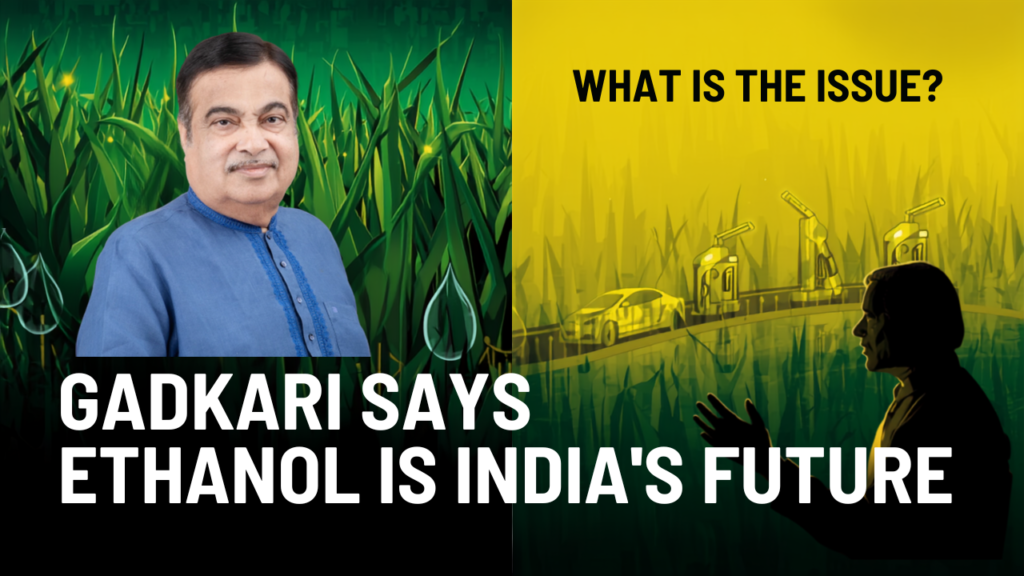
Gadkari’s Brazil Ethanol Comparison Leaves Out 20 Years

Brazil India Ethanol Fuel Comparison. Gadkari Says Ethanol Is India’s Future. Brazil Took 20 Years to Get There Every time Nitin Gadkari sits down for an interview these days, one question follows him around: why does E20 petrol feel like a punishment for people who never asked for it? In his recent conversation with journalist Deepak Chaurasia, the Union Road Transport and Highways Minister did what he almost always does when the ethanol question comes up. He defended the policy, pointed to Brazil as the model India is following, and dismissed the mileage and engine-damage complaints as the work of a “petrol lobby” running a paid campaign against him. It’s a compelling story. It’s also missing some fairly important context and if you’re one of the millions of Indians who’ve watched their two-wheeler or ageing sedan run rougher since E20 became the default at the pump, that missing context matters to your wallet. Here’s the fuller picture, and why the way E20 has been rolled out deserves more scrutiny than it’s getting. Talking to Deepak Chaurasia, Gadkari stuck to the position he’s held through months of criticism: ethanol blending is good for farmers, good for the economy, and good for the environment, and the backlash against it is manufactured. This isn’t a new line for him. At the FADA Auto Retail Conclave and again at the Business Today India@100 Summit, he made near-identical arguments that the “petrol lobby is very rich” and behind the social media pushback, and that agencies like ARAI and the Supreme Court had already cleared E20 as safe. At one event, he went further, rejecting the idea that ethanol policy served his personal interests by insisting his “brain is worth Rs 200 crore a month.” [Suggested visual: A pull-quote graphic featuring Gadkari’s “petrol lobby” remark alongside a small info-box summarizing the Supreme Court’s dismissal of the PIL against E20.] To be fair to him, he hasn’t been entirely inflexible. In more recent remarks, he acknowledged that E20 petrol can reduce vehicle mileage because of ethanol’s lower energy density, even while insisting it doesn’t damage engines. That’s a shift worth noting but it also confirms exactly what critics have been saying for a year: this fuel does cost you kilometres per litre, whether or not it damages your car. My Take: Two Things Gadkari Keeps Getting Wrong in These Interviews I want to be upfront that what follows is opinion, not just reporting. But it’s an opinion built on watching this rollout unfold in real time, and I think it holds up. 1. This isn’t even his ministry to defend alone Gadkari is the Road Transport and Highways Minister. Fuel its composition, pricing, and blending targets falls under the Ministry of Petroleum and Natural Gas, headed by Hardeep Singh Puri. Puri has, in fact, made his own public defence of E20, pointing out that Brazil runs E27 without major engine failures and admitting a possible efficiency loss of “up to 3 percent.” So why is Gadkari the face of nearly every ethanol controversy? Partly because he’s the more visible, quotable minister, and partly because his own family’s ethanol-linked business (more on that below) keeps dragging him back into the conversation. But if E20 is a fuel-blending policy, the petroleum minister not the roads minister should be leading with the technical answers on pricing, labelling, and consumer protection. Splitting the responsibility this way leaves the person who’s actually accountable for pump-level transparency largely out of the public conversation. 2. The Brazil comparison is honest about the destination, not the journey Gadkari invokes Brazil constantly as proof that high-ethanol fuel works. It’s not a bad reference point – Brazil genuinely is the global benchmark here. But the comparison is incomplete in a way that changes the whole argument. Brazil’s Proálcool program was officially launched on November 14, 1975. Flex-fuel vehicles that could run on any blend of petrol and ethanol only arrived in the Brazilian market in March 2003 nearly three decades later. Even then, it took Brazil just six years to get 90% of new vehicle sales onto ethanol-compatible engines, but that speed was possible because the country built the entire ecosystem pumps, engines, and consumer choice around the fuel from day one. Crucially, the Brazilian government relied on a mix of voluntary mandates for manufacturers, financing for producers, and tax breaks for buyers of ethanol-compatible vehicles, and it phased subsidies out only once the market had adjusted. And Brazilian motorists have always known exactly what they’re filling their tanks with, because pumps clearly display the blend, unlike in India where there is no such labelling. [Suggested visual: A side-by-side timeline infographic “Brazil’s Ethanol Journey (1975–2003, 28 years to flex-fuel maturity)” vs. “India’s Ethanol Journey (2003–2025, 20% blending in roughly two decades but full mandatory rollout compressed into a few years).”] That’s the gap in the “we’re following Brazil” narrative. Brazil gave its citizens time, choice, and clear labelling. India has compressed a decades-long transition into a few years and skipped the choice part entirely. The Real Problems Nobody in Government Is Fully Addressing No pump-level disclosure. If you fill your tank today, you often have no simple way of knowing whether you’re getting E10, E20, or a 100-octane ethanol-free option, unless you specifically hunt down premium grades. Reports have confirmed that regular petrol from Indian Oil, HP, BP, and Shell is now uniformly E20, and only the 100-octane premium grades remain ethanol-free. That’s a meaningful choice being made for you, quietly. Same price, less energy. This is the part that should bother every commuter. E20 is sold at essentially the same price as regular petrol despite delivering roughly 5 to 8 percent less energy per litre, which means you’re paying the same amount for less mileage. Ethanol procurement costs have actually risen past the cost of refined petrol in recent months, which is precisely why the fuel isn’t priced any cheaper at the pump, whatever the original promise was. Real wear on older vehicles. Ethanol-blended fuel

Politics

131st Amendment Bill Women’s Reservation: Why It Failed

131st Amendment Bill for Women’s Reservation: The Delimitation Drama That Shook Parliament in 2026 Hey there, if you’re scratching your head over the sudden buzz around the 131st Amendment Bill for women’s reservation and that high-stakes delimitation push, you’re not alone. Just two days ago, on April 17, 2026, the Lok Sabha delivered a stunning blow: the bill failed to pass. It wasn’t even close to the two-thirds majority needed. Look, I’ve been covering Indian politics for over 15 years here at ClarityWire, and I’ve seen my share of dramatic parliamentary moments. But this one? It felt different. The government tried to fast-track 33% seats for women in Parliament and state assemblies by linking it to a fresh delimitation exercise. The idea was bold—get it done by the 2029 elections instead of waiting till after 2031. Yet it crashed and burned. Here’s the full, no-spin story based on everything that unfolded, from the decades-old history to the exact details of what those bills proposed. I’ll walk you through why it matters, what went wrong, and yes, my honest take at the end. Because in a democracy this big, understanding these moves isn’t just insider stuff—it’s how we all stay informed. The Long Road to Women’s Reservation: History That Explains Today’s Chaos Women’s reservation in higher legislatures didn’t pop up overnight. The fight has dragged on for nearly 30 years, and the roots go even deeper. Back in 1992-93, the 73rd and 74th Amendments nailed it at the grassroots level—33% seats reserved for women in panchayats and municipalities. The results? Game-changing. Women leaders started prioritizing real issues like clean water, schools, and health clinics. Many states even bumped it up to 50%. Success story, right? But when it came to Parliament and state assemblies? Total gridlock. The first serious attempt was the Constitution (81st Amendment) Bill in 1996 under the Deve Gowda government. It lapsed. Same story in 1998 and 1999. The UPA tried again in 2008-2010—passed the Rajya Sabha but never made it to a Lok Sabha vote. Committees after committees recommended the same thing: 33% quota, rotation of seats, a 15-year trial period, and maybe a sub-quota for OBC women down the line. Yet every time, opposition over losing male seats or demands for caste-based tweaks killed the momentum. By the 17th Lok Sabha, women held just 14-15% of seats nationally. Pathetic for the world’s largest democracy. That’s the backstory. All that delay set the stage for the 2023 breakthrough—and the 2026 drama we’re dissecting today. The 2023 Game-Changer: What the Nari Shakti Vandan Adhiniyam Actually Delivered Fast-forward to September 2023. The Constitution (128th Amendment) Bill—later the 106th Amendment Act, or Nari Shakti Vandan Adhiniyam—finally passed with huge majorities in both houses. Presidential assent came on September 28. The law was straightforward and historic: One-third (33%) seats reserved for women in Lok Sabha, state assemblies, and Delhi’s assembly. That quota also kicks in for SC/ST seats—one-third of those reserved for SC/ST women. Seats rotate after every delimitation. It lasts 15 years (extendable by Parliament). But here’s the catch that everyone’s still talking about: it doesn’t start right away. The reservation only kicks in after the next census and a fresh delimitation based on that data. Everyone assumed that meant post-2031. Northern states with faster population growth would gain seats; southern states worried about losing influence. The “delimitation link” became the big delay button. This is exactly why the government came back in April 2026 with the 131st Amendment Bill for women’s reservation and its sister bills. They wanted to untie the knot and make it happen sooner. What the 2026 Bills Proposed: Full Breakdown of the Delimitation Push On April 16, 2026, the government tabled three connected bills in the Lok Sabha during a special session. The goal? Operationalize the women’s quota by the 2029 elections using 2011 census data and expanding Parliament so no region “loses” representation. The Star of the Show: Constitution (131st Amendment) Bill, 2026 This was the big constitutional change. It tweaked Articles 81, 82, and 170 to: Raise Lok Sabha strength from 550 to up to 850 (815 from states + 35 from UTs). End the 1971-census freeze on seat numbers (that freeze was always set to expire after 2026 anyway). Let Parliament decide the timing of delimitation and which census data to use—basically green-lighting 2011 figures for speed. Remove the 2023 Act’s “wait for next census” clause. Women’s reservation would now start right after the new delimitation finishes. Keep the 15-year duration and seat rotation intact. Extend the quota to assemblies in Delhi, Puducherry, and Jammu & Kashmir. The Delimitation Bill, 2026 This ordinary bill set up a new Delimitation Commission (Supreme Court judge as chair, plus Election Commissioners). It would redraw constituencies using the “latest published census” (2011 data) and hold public hearings. Proportional seat allocation based on current population realities. Union Territories Laws (Amendment) Bill, 2026 A short one—just extending the 33% women’s quota to the three UTs with legislatures. If it had passed, Lok Sabha could have ballooned to around 850 seats, with roughly 272-283 reserved for women from day one. Northern states would gain more clout; the government promised southern states wouldn’t suffer because of the overall expansion. Critics called it a clever way to deliver “Nari Shakti” while quietly fixing the long-overdue delimitation headache. What Actually Happened in Parliament: The Vote That Changed Everything Debate was fiery. The bill went to division on April 17. Result: 298 votes in favor, 230 against. With 528 MPs present and voting, it needed roughly 352 yes votes for the two-thirds majority. It fell short—by a lot. This was the first time a constitutional amendment from the Modi government got defeated in the Lok Sabha. The other two bills were immediately withdrawn because they couldn’t stand alone. Opposition parties hammered two big points: the North-South divide (southern states feared diluted voice despite seat expansion) and the missing caste census angle. Some wanted OBC women sub-quotas baked in. The government argued it

Scroll to Top